Project MIRA
Autonomous underwater vehicle
A sealed-hull AUV that placed 2nd at the TAC Challenge in Norway, 2024 — where every design decision is downstream of the fact that you cannot open the hull once it is closed.
2nd
TAC Challenge
Norway, 2024, as part of the Dreadnought Robotics team.
Problem
A sealed pressure hull removes the normal debugging loop. Every board, connector and power path inside it has to work when the hull closes, because opening it in the field is not an option and a leak is terminal.
That constraint drives the electrical architecture more than any performance requirement does.
What I built
The electrical system inside the hull, and the control software driving it.
- Electrical architecture and power distribution within a sealed pressure hull
- Hydrophone and sensor-control subsystem integration
- PCB prototyping
- ROS / MAVROS / MAVLink control software
- Cross-functional test coordination across the team
Designing for a hull you cannot open
Every electrical decision here is downstream of one constraint: once the pressure hull closes, nothing inside it can be reached, and a leak is terminal.
The hull closes
No further physical access. No debugging loop.
Power distribution inside the hull
Every rail has to come up correctly the first time.
Sensor and hydrophone subsystems integrated
Prototyped on PCB before anything was sealed.
Control stack
ROS / MAVROS / MAVLink, validated in ArduSub simulation first.
In the water
A fault inside the hull — the mission ends, and stays endedIt holds — autonomous docking and the competition run
Who did what
MIRA is Dreadnought Robotics' vehicle. This table exists so the line between the team's work and mine is not left to inference.
| Area | Whose |
|---|---|
| Electrical architecture and power distribution | Mine |
| Hydrophone and sensor-control integration, PCB prototyping | Mine |
| ROS / MAVROS / MAVLink control software | Mine |
| Cross-functional test coordination | Mine |
| Mechanical design, pressure hull, frame and thrusters | The team's |
| Competition entry and the 2nd place at TAC Norway 2024 | The team's |
Limitations and failure modes
- Competition-scoped. The vehicle was built to a challenge specification rather than for sustained deployment.
Gallery
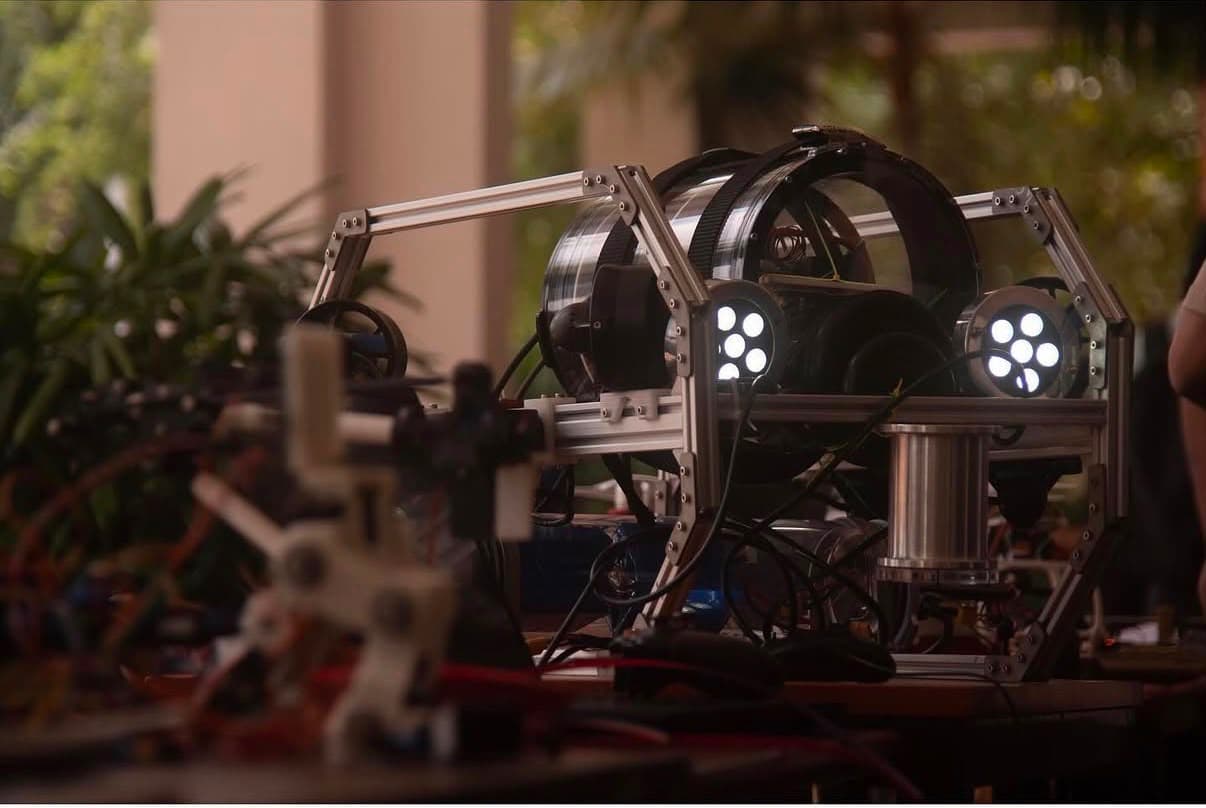
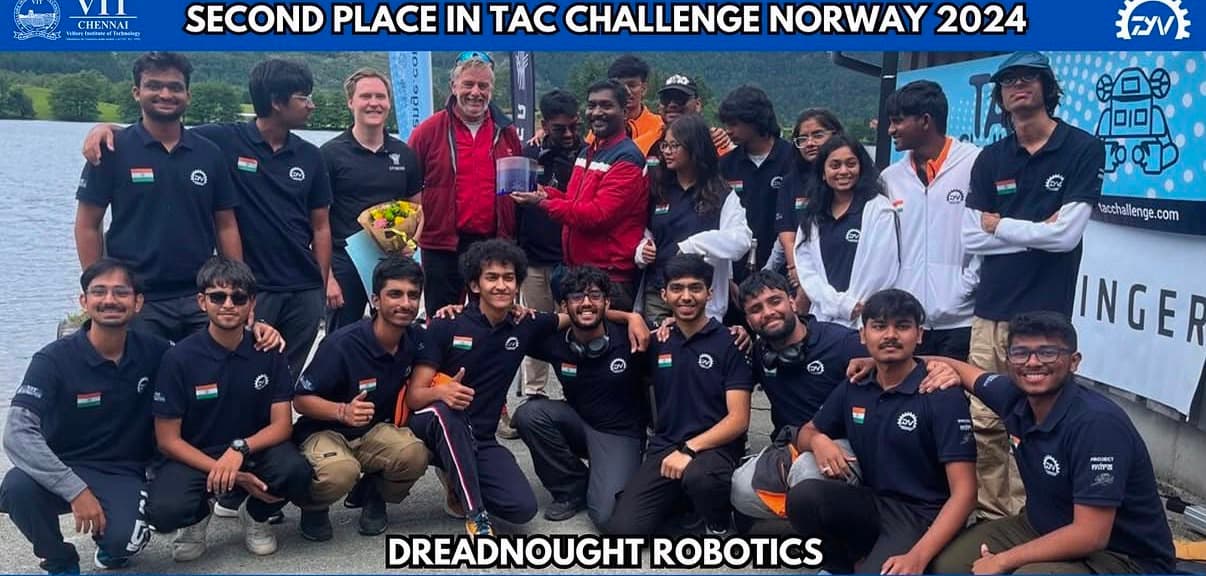
Not yet captured
- Electronics stack inside the pressure hull
- Underwater footage
Attribution
- My contribution within a team
- Project MIRA is the work of the Dreadnought Robotics team. My contribution was the electrical architecture and power distribution, hydrophone and sensor-control integration, PCB prototyping, and the ROS/MAVROS/MAVLink control software. The vehicle, mechanical design and competition result are the team's.
Related
- Kurat
Autonomous conversational robot
- Pushpak Viman
Search-and-rescue UAV and the drone-rover transformation system